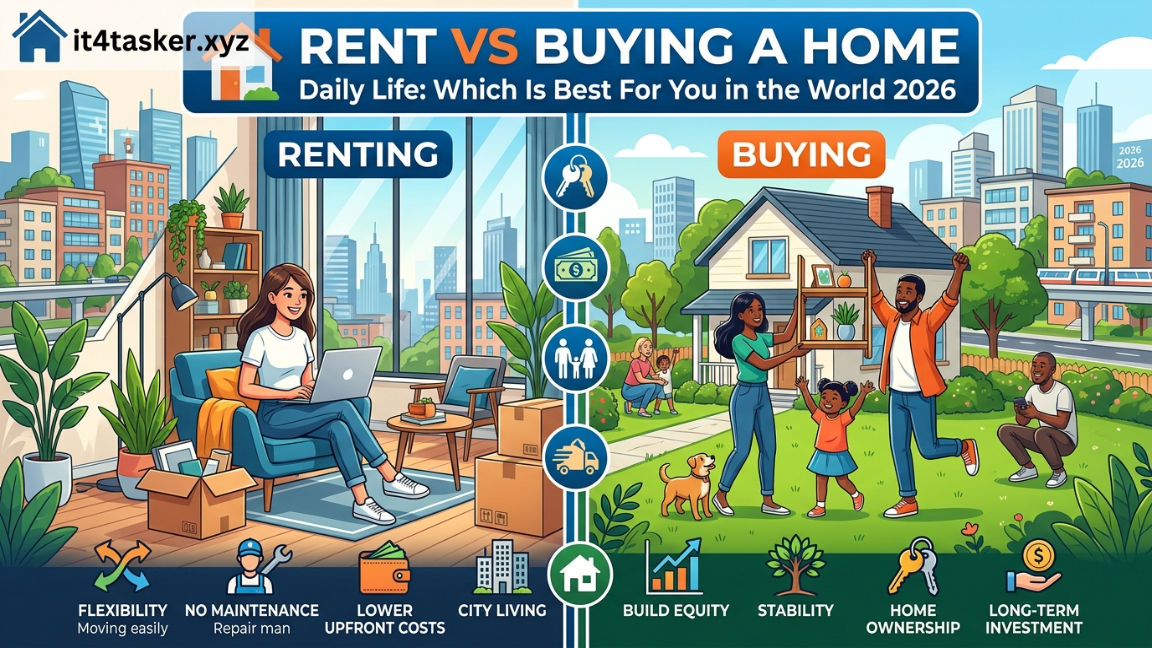
Introduction:
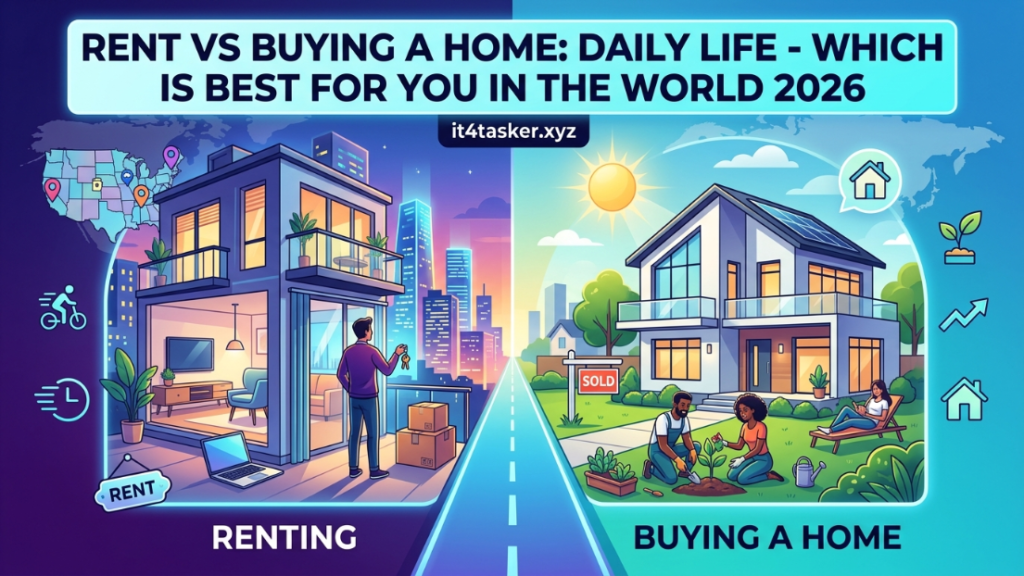
- Choosing between renting and buying a home is a big decision and the best option for you will depend on a number of factors.
- Factors including your finances, lifestyle, and future plans. In this post , we’re going to look at renting versus buying.
- Things like property value, taxes, maintenance, and repairs, and some questions to ask yourself to help you weigh your options when it comes to renting.
The Case for Renting:
- While home ownership holds a certain something.
- Renting comes with a whole box of benefits that are often overshadowed.
- Traditional ownership is better off painting a new narrative that clearly shows why renting can be a good fit.
- Your perfect fit Consider yourself first.
- Financial strength Personal investment Think about dropping $220,000.
- Paying down a condo and investing instead It’s in that business you’ve always dreamed of starting or being able to start Paying that money aggressively Renting lets you invest.
- Give yourself your emotions and your wallet Not just breaking the brick-and-mortar location
- Freedom you don’t even want Your home to determine your destiny if you land Your dream job in a bustling city Country rental allows you to pack.
- Chase your bags and this opportunity.
- Without the headache of selling a house Or you decide to test the waters in a.
- A vibrant city apartment for a year Before committing to buying in Suburban location freedom empowers.
- You don’t just have to live life on your own terms.
- Your property terms time and Maintenance freedom time is your most valuable.
- You can rent out valuable resources.
- You spend it wisely on those faucets that can bother you for weeks.
- Endless weekends spent trimming overgrown.
- Backyards as a renter you just dial.
- You have a landlord and they set it up by number.
- Unexpected maintenance bills or Property tax increases are your loss Carefully crafted budget so you can Spend this Saturday afternoon catching up.
- Take a walk with your favorite read.
- Friends or relax instead.
- Trying to fix a plumbing problem in your time.
- Again it’s yours to decide what you can prioritize.
- Really adds flexibility to your life.
- Renting lets you downsize from a.
- Spacious family home to a cozy studio Apartment after your kids go College or you can easily upgrade.
- From a one bedroom apartment To a three bedroom townhouse as your family Expands without the hassle and expense.
- Allows for renting to sell and buy.
- To take the hassle out of home ownership And focus on enjoying your life.
- Not burdened by the issue of rent to buy.
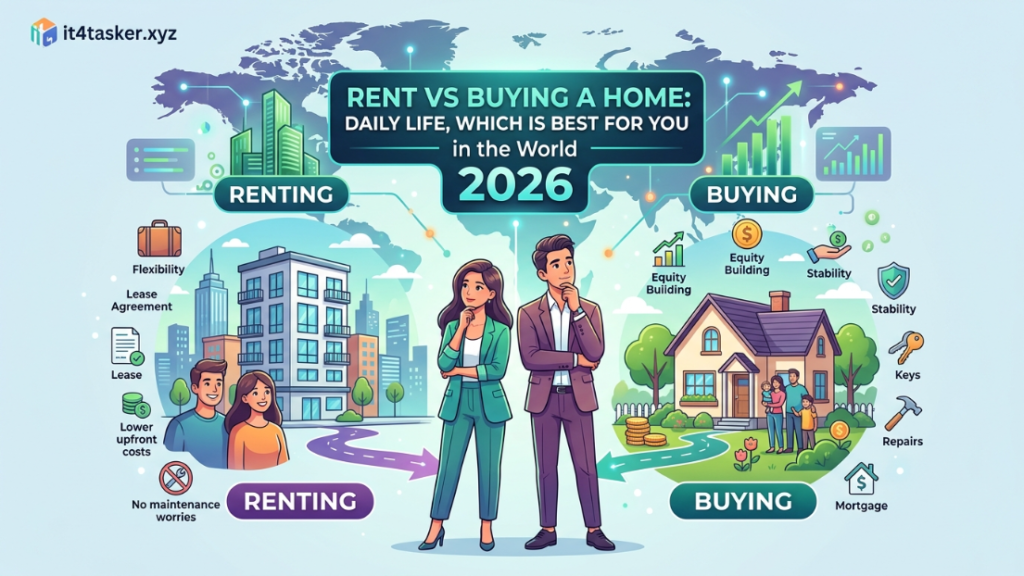
The Case For Buying:
- It gives you freedom but buying a home gives you.
- You strengthen your community and can help.
- You reach the definition of financial freedom.
- Perhaps the biggest vote for ownership is the definition.
- Close your eyes and see yourself 10 years from now with your weird starter home having increased in value thanks to the rising market trends and your careful maintenance of a $200,000 mortgage.
- Ready for a $300,000 Nest Egg.
- Fund your retirement dreams or your children’s.
- College education By now you can tell.
- That owning your home is not just about a roof over your head.
- It’s a potential.
- Unlike rent that disappears into the landlord’s pocket. Every mortgage payment becomes Foundation of your personal wealth Dream when you channel an additional.
- Money for your mortgage that you know you have.
- You are building a home with equity tax benefits.
- Ownership also comes with tax benefits.
- From mortgage interest deductions to property tax credits that you get to reduce your taxable income and receive a Leave you with more money to invest come tax season Your home grants you the freedom to transform it into a.
- It reflects your unique style.
- The canvas where your dreams take clear shape.
- You can tear down that cluttered wall.
- And create an open-concept living space You will be bathed in sunlight.
- The satisfaction of retreating and Appreciating your hard work
- You have replaced the lush garden.
- Your nurturing and comfortable reading nook.
- You have made the community more like a rental.
- Allows freedom and flexibility.
- Some may find moving around more nomadic.
- Stressed existence allows you to.
- Put down roots in the community you love.
- Watch your children grow up within it
- Build and create the familiar walls of your home
- Lasting traditions that become.
- The fabric of your family history before us
- Get a couple of extras
- Consider when deciding between renting.
- And if you’ve enjoyed the video so far, owner
- Please consider liking and
- bookmarking my website to this really helps us now.
- Let’s talk about the three biggest.
- Factors between choosing and Three questions you should ask yourself.

Property Value:
- The value of a property when it comes to renting.
- And the difference between buying a property
- Value is perhaps the most fundamental.
- The aspect to consider as a tenant
- You have no ownership stake in the property.
- There are no fluctuations in its value
- that directly affect you financially.
- Rent can increase over time based on
- Market factors and lease terms but this
- is not tied to the proper property
- Intrinsic value but your
- mortgage payments as a homeowner contribute to the building.
- Over time, the equity in the property
- If the value of the property increases your standing.
- When you sell it, you can financially
- Gain.
- Become a significant source of wealth.
- Especially stable and accumulated in
- During appreciating markets
- The potential for appreciation is attractive.
- It also carries a risk of depreciation.
- If you need to sell in a falling market, the thing about property value is that it can potentially replace your mortgage.
- The payment, but the rent, usually remains.
- At least within the terms of the lease, stable monthly expenses and easy taxes are not included in the budget.
- Tenants are responsible for paying property taxes, which are imposed by local governments.
- The assessed value of the property can be a significant cost savings, especially in areas with high property taxes.
- They cannot deduct mortgage interest or property taxes, but they can.
- Depending on their income and rental situation, they may be eligible for a tenant tax credit. Credits that can be offered directly to the tax payer.
- Homeowners, on the other hand, are fully responsible for paying the annual property tax.
- The costs and rates can vary greatly. Depending on the location, they can. Reduce their interest.
- Mortgages from their taxable income Potentially reducing their tax liability That can be especially beneficial for.
- Those with high mortgages can also.
- But are eligible for depreciation.
- Property can further deduct these
- Reduce their overall tax burden.
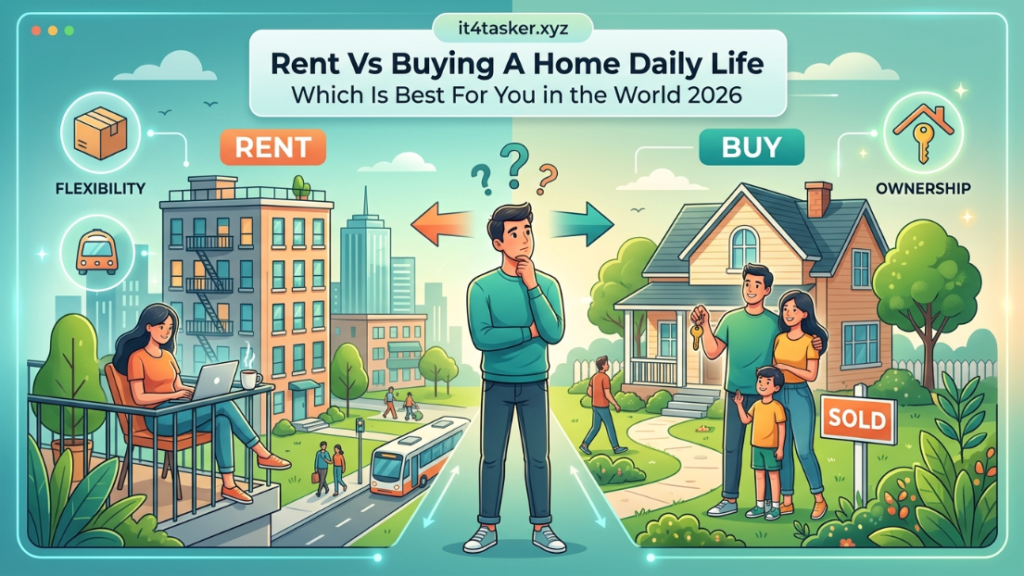
Maintenance and repairs:
- When it comes to maintenance and repairs.
- Maintenance and repairs are usually
- the landlord’s responsibility to fix.
- Major appliances, plumbing issues, structural issues, and other necessary
- repairs can give the tenant peace of mind.
- Knowing that they won’t be burdened by it.
- Unexpected repair costs, on the other hand, are something that tenants have limited control over.
- Repairs and renovations can be made by landlords.
- Prioritize functionality over aesthetics.
- And may not be worth making major changes
- unless they add to the value of the property.
- As the homeowner, you are responsible for them.
- All of this can be expensive and time-consuming
- and requires a budget.
- Repairs and potential repairs are, but
- homeowners have full control.
- Their property allows them to make
- repairs and renovations as they see fit.
- Giving more personalization and
- satisfaction with the living space now
- is more important to determine who is best for
- You and your unique individual need to ask yourself these three questions:
How long will you stay?
- I will be there as long as you know.
- The potential time frame in a place is the most important factor in deciding between renting and buying, like deciding whether to rent a bike.
- Buying one for a short-term trip to the park or an investment Are you living there for a short term like 1?
- Mid-term 3 to 5 years or long-term 5 plus years If you see yourself staying for just a couple of years, a rental offer is unmatched.
- Flexible moving to a new job, pursuing temporary opportunities or navigating life changes goes a long way.
- Easy to sell without the burden of down payments, realtor fees, and potential market costs.
- These costs can fluctuate over a short time frame.
- Renting still offers the benefits of ownership, but buying becomes more expensive.
- If you find yourself in the same place for years, equity building accelerates. Potential appreciation offers financial rewards.
- Profits and mortgage payments over time are often more stable than renting.
- You have control over your living space and can customize it to your heart’s content.
- I’ve saved two for your peace of mind.
Have you saved enough?
- Buying a home is a significant financial milestone that requires a healthy dose of careful planning and the fact that you have saved enough.
- A yes or no question of affordability, lifestyle choices, and long-term desires are all in question while many associate saving enough with a down payment.
- A down payment is included in home ownership.
- Other expenses, including closing costs, can range anywhere from 3 to 6 percent. The purchase price, monthly mortgage payments, of course, are the headliners.
- But don’t forget other expenses like property taxes, PMI, homeowners’ insurance, and HOA fees and maintenance during your move.
- You don’t have to be your own handyman.
- You want a strong emergency fund to anticipate and handle unexpected maintenance and repairs.
Can you afford it?
- While for many people a dream comes with a hefty price tag and ongoing financial commitments, it’s important to take a deep dive before jumping into the deep end.
- Ask yourself some key questions that will help you decide what you want to do.
- Compare your monthly mortgage payments to your total income, including the mortgage. Ideally, keep your DTI to less than 36%. A higher DTI can leave you financially stressed and struggling to keep up with ongoing expenses.
- Another key number you need to consider is your emergency fund.
- Your emergency fund should ideally cover 3 to 6 months of living expenses.
- There should be no unexpected repairs or job loss.
- Consider your financial security.
- Your current savings and any potential investments that could bring in.
- In the additional income you can allocate a.
- Their share towards home ownership Without jeopardizing your long-term Financial goals so if stability and Expected expenses are key rent.
- May be a better option that you avoid.
- Risk of market fluctuations and Unexpected expenses while maintaining Flexibility and freedom of movement However if you have savings Build equity and can see yourself there.
- Can buy for a long period of time
- Being a great option Thank you very much.