Wave System and Energy Transfer:
Basic Definition of Waves
What is a wave?
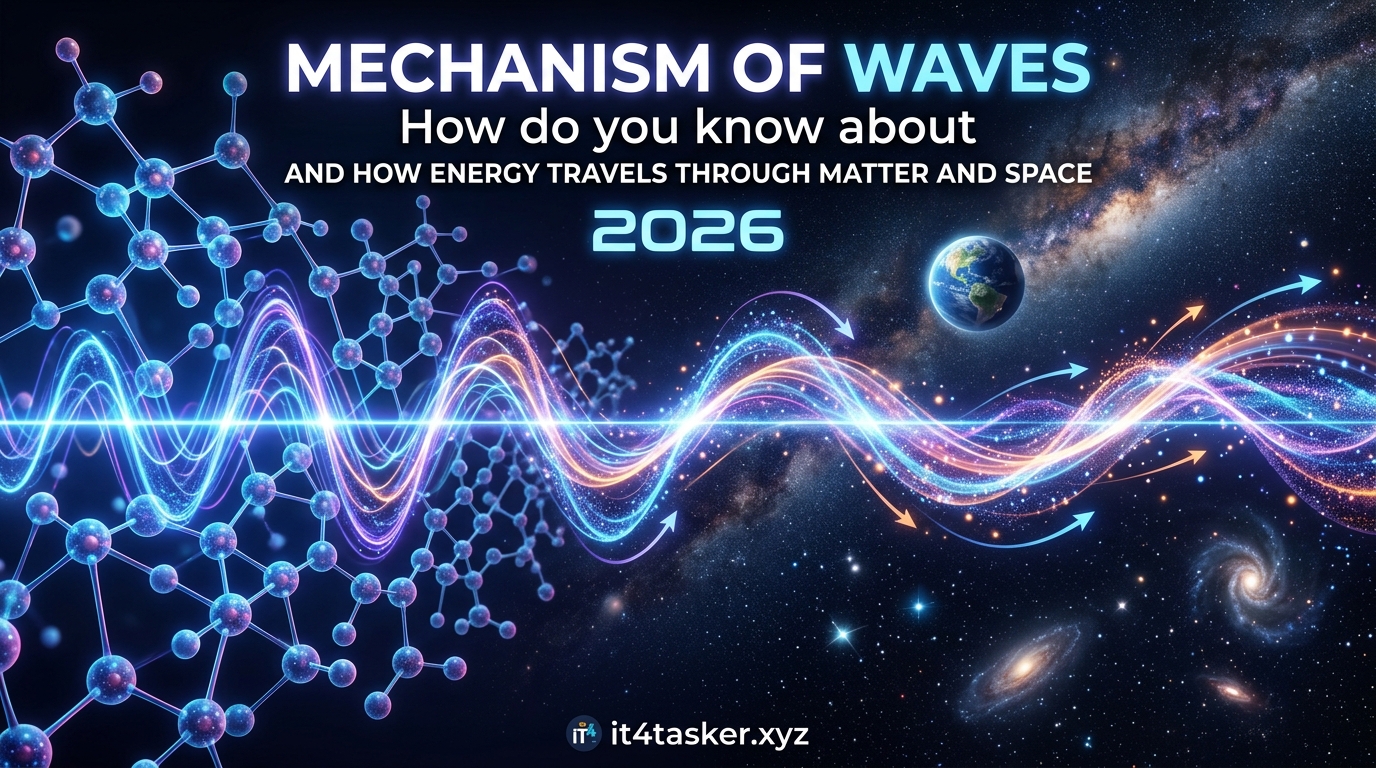
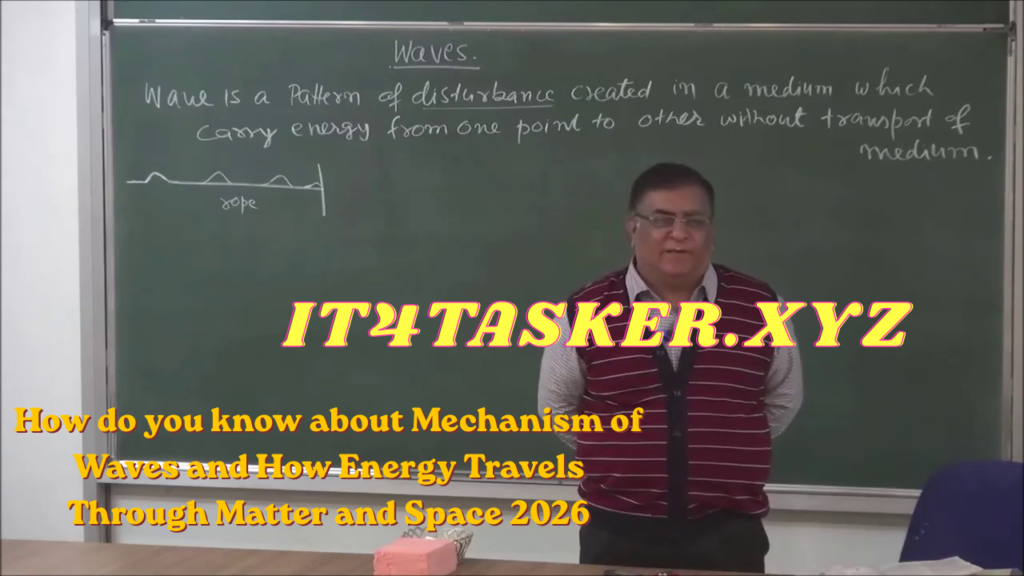
When you throw a pebble into water, it creates a circular wave, but have you ever wondered what these waves actually do? According to science, a wave is a movement or vibration that transfers energy from one place to another. ([Open OCO][1])
Interestingly, waves do not move matter themselves, but only transfer energy. For example, in ocean waves, the water moves up and down in its place, but does not move forward. It is just like people sitting in their seats in a stadium but making a “wave” by moving their hands up and down.
Understanding waves is actually equivalent to understanding the universe because this system helps us hear sound, see light, and even receive mobile signals.
The relationship between energy and motion
Energy is the force that enables something to do work. Waves transport this energy from one place to another. ([NASA Science][2])
When something moves or vibrates, it affects the particles around it, and this effect takes the form of a wave. For example, when you pluck a guitar string, it creates vibrations, which reach your ear through waves in the air.
The same principle applies everywhere, whether it is earthquakes inside the Earth or the travel of light in space.
Types of Waves
Mechanical Waves
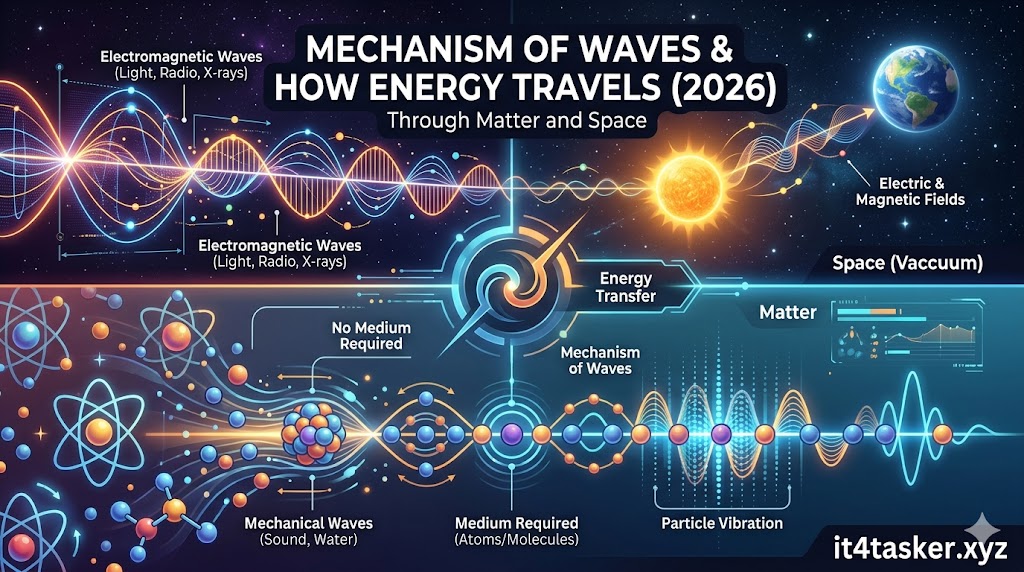
Mechanical waves are those that travel through some kind of material, such as water, air, or solid objects. ([NASA Science][2])
Examples of Sound and Water
When you speak, your voice creates vibrations in the air, and these vibrations travel in the form of waves. Similarly, water waves move through water particles.
This process is just like a domino effect, where one particle moves another, and thus the energy continues to move. ([NASA Science][2])
It is important to understand that here the particles do not leave their place and travel, but only transfer energy through vibration.
Electromagnetic Waves
These waves do not require any matter and can travel even in space. ([NASA Science][2])
Light and Radio Waves
Light, radio signals, X-rays are all similar types of waves. These waves are made up of vibrations of electric and magnetic fields. ([K12 LibreTexts][3])
That is why sunlight travels through space to reach the Earth, providing the basic energy for life.
How is energy transferred?
Motion and vibration of particles
The main way energy is transferred in waves is through vibration. When a particle moves, it also moves the particles near it, and the cycle continues. ([Biology Insights][4])
It is just like when you pull a rope, its movement continues. Here too, the particles of the rope remain in place, but the energy moves forward.
Transfer of energy vs. matter
Most people think that waves also carry matter, but in reality this is not the case. ([Open OCO][1])
Waves only transfer energy, while matter remains in place. This is why a stone floating in the ocean does not move away with the waves, but only moves up and down.
Wave Properties
Wavelength
Wavelength is the distance between two peaks of a wave. ([NASA Science][2])
It tells us how long or short a wave is, and can also be used to estimate its energy.
Frequency
Frequency indicates how many waves pass through in one second. ([NASA Science][2])
A higher frequency means more energy, such as in X-rays.
Velocity
Each wave travels at a specific speed. The speed of light is the fastest, which is about 300,000 kilometers per second in vacuum.
Wave Behavior
Reflection
When a wave hits a surface, it bounces back, which is called reflection. ([NASA Science][5])
Seeing your image in a mirror is an example of this principle.
Refraction
When a wave passes from one medium to another, its speed and direction change.
Diffraction
When a wave travels around an obstacle, it is called diffraction.
Energy Transfer in Space
Waves Travel in Space
There is no matter in space, yet light and radio waves travel. This is possible because electromagnetic waves can travel without a medium. ([NASA Science][2])
These waves propel themselves by the interaction of electric and magnetic fields.
Energy from the Sun to Earth
Light from the Sun is the main source of life on Earth. ([K12 LibreTexts][3])
If these waves were not there, the Earth would be completely dark and cold.
Importance of Waves in Daily Life
Uses in Technology
Almost every technology in today’s world depends on waves, such as:
- Mobile Phones
- Internet
- Wi-Fi
- Satellite Communication
All of these work through electromagnetic waves.
Role in Natural Phenomena
Waves play an important role not only in technology but also in nature, such as:
- Earthquake waves
- Ocean waves
- Sound
Modern Science and Waves
Quantum Waves
In quantum physics, particles are also considered as waves. ([Learn Physics][6])
This concept is the foundation of modern science and is very important at the atomic level.
Gravitational Waves
Gravitational waves are vibrations in space, which are generated by large astronomical events. ([Physics LibreTexts][7])
They help us understand the secrets of the universe.
Conclusion
Waves are a fundamental fact of the universe that transfer energy from one place to another, whether through matter or within space. Without them, we could not hear sound, see light, and modern technology would not exist. The wave system teaches us that everything in the universe is interconnected, and the flow of energy is the basis of life.
FAQs
1. Do waves also transport matter?
No, waves only transport energy, not matter.
2. Can sound travel through space?
No, because sound requires a medium.
3. How does light travel through space?
Light is an electromagnetic wave that can travel without a medium.
4. What is the most important property of waves?
Transfer of energy.
5. Are all waves the same?
No, there are different types of waves, such as mechanical and electromagnetic.