
Introduction:
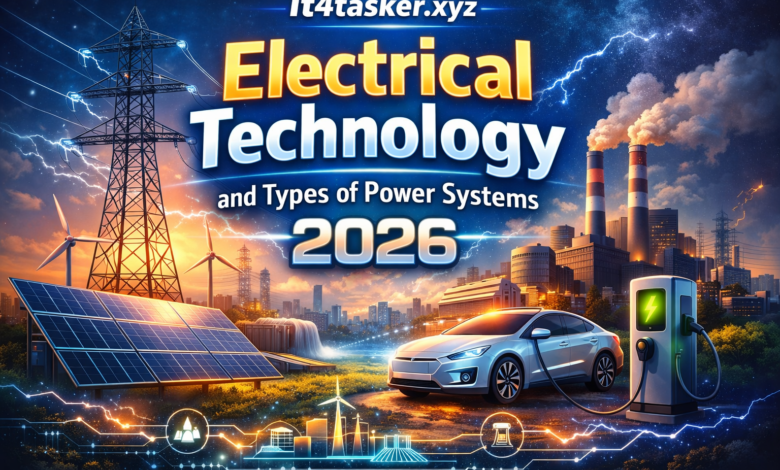
Electrical technology is the field that deals with the generation, transmission, distribution and use of electricity. In today’s modern era, everything in our lives depends on electrical energy. Be it home lights, computers, mobile charging or large industrial machines, everything is possible thanks to electrical technology. This technology not only makes our lives easier but also plays an important role in industrial, commercial and scientific development.
Importance of Electrical Technology
Without electrical technology, today’s modern society would come to a standstill. It:
- Ensures energy supply in homes and offices.
- Enables the effective functioning of machinery and electronic devices.
- Protects against accidents through safety systems.
- Helps in efficient use of energy and environmental protection.
Without electrical technology, neither electric vehicles, nor smart homes or modern hospitals are possible. It is the backbone of modern life.
Basic Components of Electrical Energy
Electrical Devices and Equipment
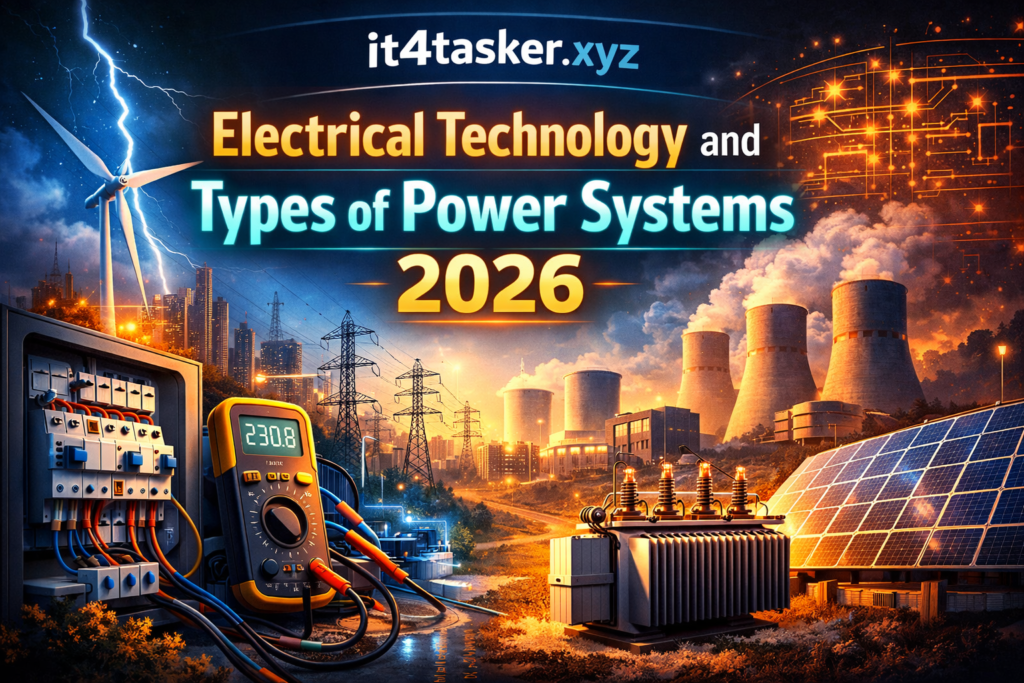
Electrical devices such as motors, generators, transformers, circuit breakers, etc. are the basic elements of electrical technology. Each device is designed for a specific task, such as a transformer that converts voltage while a generator converts mechanical energy into electrical energy.
Control and Protection Systems
Control systems help equipment operate correctly, and protection systems protect against problems such as overload or short circuit. Automation and smart control devices play a major role in today’s power systems.
What is a power system?
A power system is an integrated network that generates, transmits, and delivers electricity to consumers. It meets the energy demand by maintaining stable levels of voltage and frequency.
Main stages of a power system
- Generation:
Electricity is produced in power plants, which use fossil fuels, water, wind or solar energy. - Transmission:
Electricity is transmitted over long distances through high-voltage lines to reduce energy losses. - Distribution:
Finally, the electricity is delivered to homes and industries at a usable voltage.
Types of Power Systems
AC Power System
Alternating current (AC) is a current that constantly changes direction. It is more effective over long distances and is used mostly in homes and industries.
DC Power System
Direct current (DC) flows in one direction. It is used in batteries, electronic devices and electric vehicles. DC systems are difficult to convert over long distances.
Single Phase Power System
It is commonly used in homes. It is simple and cheap but less efficient for large machinery.
Three Phase Power System
It is used in industrial and large commercial locations. It provides constant and stable energy and is best for heavy machinery.
Conventional and Renewable Energy Sources
Conventional Power Systems
Use fossil fuels such as coal, oil and gas. They are reliable but cause environmental pollution.
Renewable Energy
Solar, wind, water and biomass energy sources are used. They are environmentally friendly, sustainable and better for the future.
Conclusion
Electrical technology is the backbone of modern life. AC, DC, single-phase and three-phase systems all have their own importance. As the world moves towards renewable energy, electrical technology will continue to develop, opening up new opportunities and innovative innovations.
FAQs:
- What is electrical technology?
It is the study of the generation, transmission, distribution and use of electricity.
- What are the main types of power systems?
AC, DC, single-phase and three-phase systems.
- Why is AC system used in homes?
It is effective for long distances and easy to change voltage.
- What is the role of renewable energy?
It reduces environmental pollution and makes energy sustainable. - What are the career opportunities in electrical technology?
Electrical Engineer, Power System Analyst, Renewable Energy Specialist and Technician.

