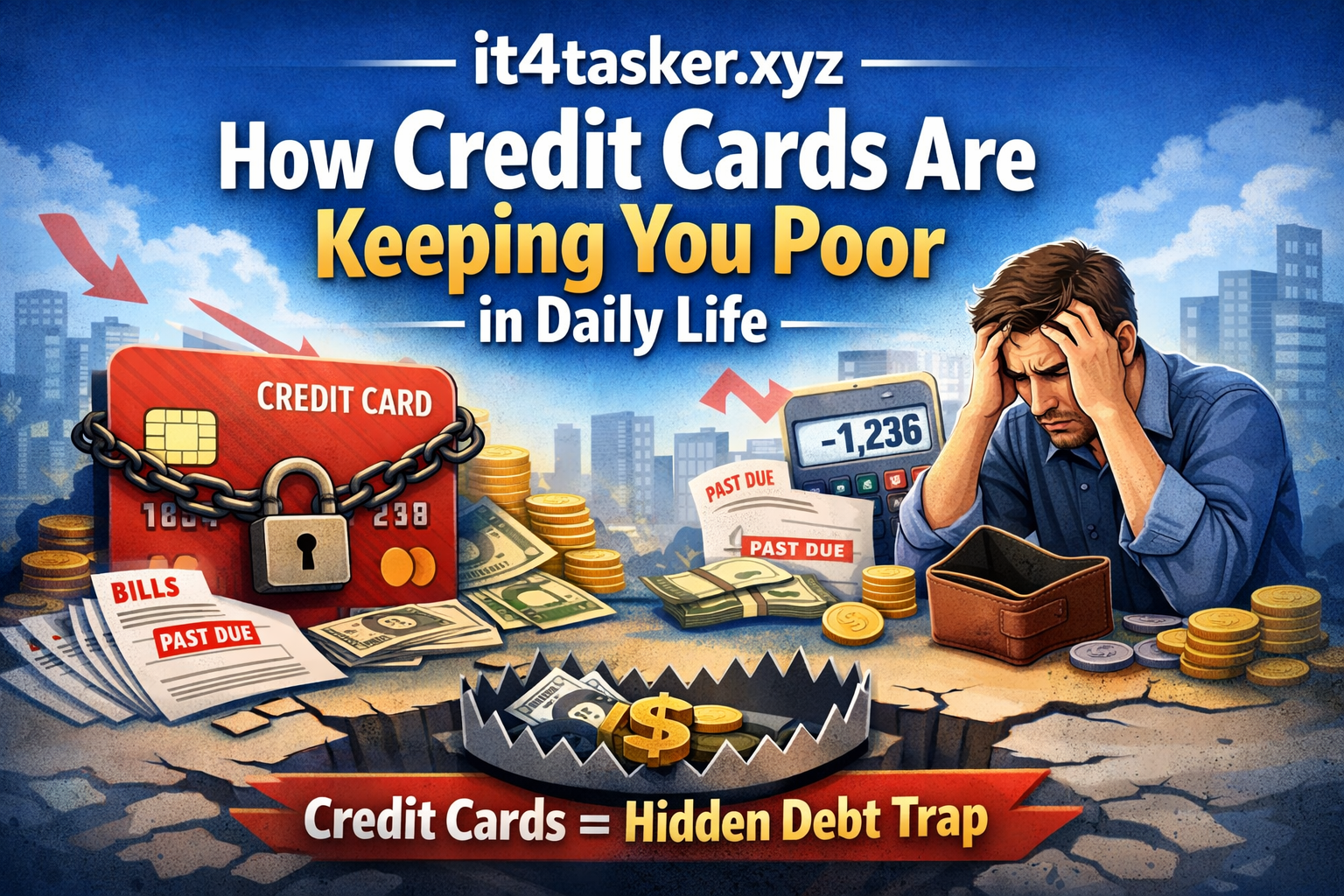
Credit Cards impact on your Financial:
Before start you must change your life when you finished reading post!!!!!
They’re in our wallets. On our phones. On our wrists. Sleek, shiny, and loaded with benefits.
Credit cards. They’re one of the most common. In the modern economy, we use them to buy coffee, pay for groceries, book vacations, and sometimes… just for the weekend. But behind the swipe, or tap, there’s a deeper. The truth is credit cards aren’t just tools of modern finance. They’re part of a well-oiled. machine that extracts wealth from the middle class while selling the illusion of freedom. Let’s talk about how credit cards are a silent trap keeping the middle class poor.
How did we get here:
The concept of buying now and paying later isn’t exactly new. In the early 1900s, department stores and oil companies issued “thank you cards” to their best customers. These were early forms of store credit, designed to encourage loyalty and spending. But the first real concept of a credit card, as we know it today, began in 1950 with the Diner’s Club card. A cardboard card that could be used at a few dozen New York restaurants and introduced a revolutionary concept: universal credit. Instead of being tied to a store, you could now carry a card that would let you spend money you didn’t already have… almost anywhere. Impact on the Middle Class Initially, credit cards were marketed to the middle class. They were aimed at professionals and business travelers; people who didn’t really need credit and could afford to pay their bills in full. But lenders quickly discovered that if everyone paid their bill, there would be no late fees, and no interest. They wouldn’t make any money.
So, they started targeting the middle class: a growing population of Americans with stable jobs, modest savings, and big dreams. Credit cards were no longer just tools. They were status symbols. You weren’t just spending money. You were earning points and earning rewards. The Illusion of Control Here’s what they don’t tell you. When you sign up for that shiny new rewards card: It’s not about the benefits. It’s about the behavior. Lenders understand that the average person doesn’t pay off their balance every month. The system is designed to encourage overspending. A night out with friends, a new pair of shoes, or that last-minute concert. You just swipe it. It’s on your card and pay it back later, right? But when that balance is gone, interest starts, and it never stops. And the banks are betting on it. They don’t make their billions from it.
Discipline They make them hopeful, overworked, financially strapped. People
Who believe they are in control until they are not. In many ways, credit cards are a symptom.
A big problem:
• Wages have stagnated.
- Costs have soared. •
- And the middle class has.
The gap is left to fill… with debt. Need to pay for car repairs? Swipe. Groceries? Swipe. A trip, just to feel Something after months of burning out? Swipe. Credit cards become a lifeline and a trap. But here’s the uncomfortable truth. Credit cards don’t help most people build wealth. In fact,
It keeps them from building it up. According to the Federal Reserve,
More than 45% of Americans carry credit card debt each month. The average interest rate? More than 22 percent. This is not a flaw in the system. It is the system. Credit card companies make billions each year Not from the rich, but from the stressed and overworked.
Normalizing Debt The normalization of debt has become so commonplace in American life; we don’t even question it. We expect car loans.
We assume it. We carry credit card balances. We plan them like monthly payments.
They’re just another part of adulthood. But those payments don’t build wealth,
They don’t build assets, And they don’t build freedom. They create profits for someone else.
The middle class is now caught in a cycle of debt repayment,
And credit cards play a central role in that trap. Unlike a mortgage or student loan, which
at least have a theoretical end date, credit card debt is revolving. That means it’s open-ended,
ongoing, and easy to extend forever. And that’s exactly how the industry likes it.
Every aspect of a credit card is designed with one goal in mind:
to make you pay just enough to keep going, but not enough to get ahead. Minimum payments,
for example, are usually set at around 1–3% of your total balance. That sounds manageable.
Until you realize what that really means. Let’s say you owe $6,000 and are making the minimum payment.
Amounting to $200 per month. It will take you about 4 (3 years and 8 months) years to pay off the card,
and in that time, you’ll have paid an additional $2,800 in compound interest working against you.
And all of this is assuming you don’t make any other payments on the card and nothing else comes up. What prevents you from making your payments on time each month. The longer you spend in debt, he more interest you pay.
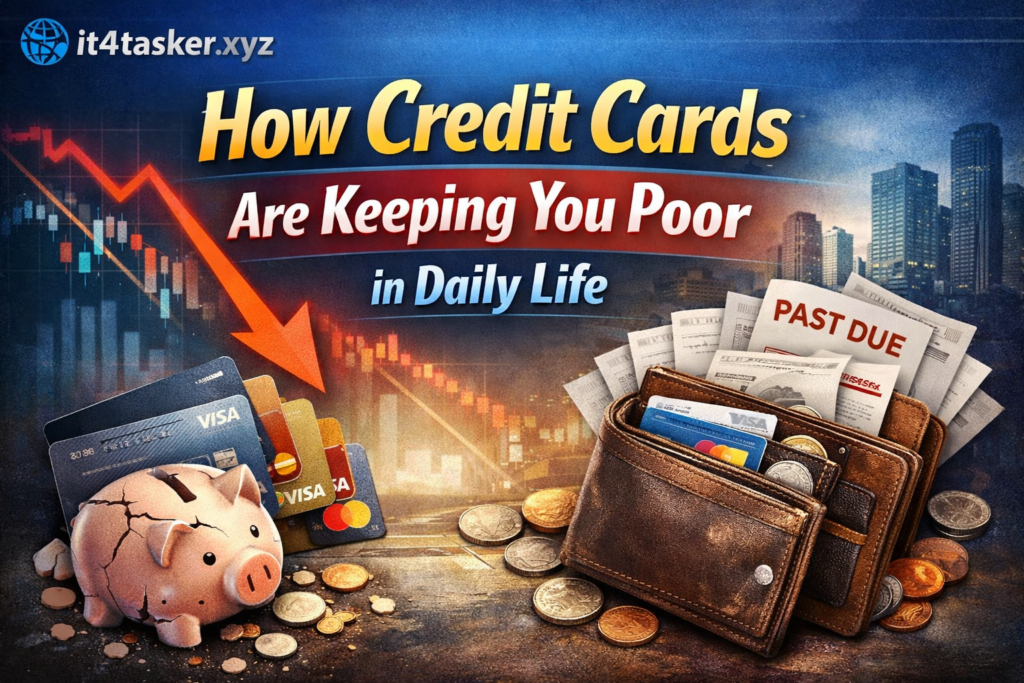
With any high-interest debt, your No. 1 priority should be to pay it off as aggressively as possible, and make more than the minimum payment. Lifestyle Inflation Lifestyle Inflation One of the sneakiest ways Credit cards keep people poor is by encouraging lifestyle inflation. In a world where wages are barely keeping up with inflation, credit cards close the gap between what people earn…
and the life they feel they should be living. Don’t have the cash for that $3,000 vacation?
Put it on the card. Need new furniture before guests arrive? Swipe it. Want to stay with friends who
seem to be doing better? There’s a card for that. Over time, it becomes a habit, and a habit it becomes. Financial Principles The trouble is, credit cards let you feel rich today — while silently making you poor tomorrow. And for millions of Americans, the result is chronic financial instability.
But perhaps the most insidious part of it all? For many middle-class American families,
it’s not the cost of living, but simply the need for a card. Most people don’t feel
like they have a choice but to use a credit card.
If you don’t have an emergency fund,
a credit card becomes your safety net. If your paycheck runs out before the end of the month,
the card fills the gap. It’s not always used for luxury, sometimes it’s just
for survival. And that’s what makes this problem so dangerous. Because when survival depends
on debt, poverty becomes a business model. The result? A generation of working Americans are struggling for financial freedom while slowly sinking under the weight of compound interest.
Breaking Free Here’s the good news. You can.
Breaking Free:
Avoid the credit card trap, but it will require a change in behavior and a change in mindset.
The first step? Awareness. Many people don’t even realize they’re trapped.
They just keep paying the minimum, they chase reward points, and they believe.
That having more credit equals having more money. But once you understand how lenders profit from these decisions, it’s easy to fix. The next step is to build your own safety net.
Credit cards are often disguised as emergency funds, but relying on debt in a crisis is a recipe for disaster. Instead, build a real emergency fund. Start with $500. Then, eventually, $1,000, with a goal of 3-6 months of expenses in a high-yield savings account.
It shouldn’t be used for investing. It’s meant to be a lifeline, so that when
life throws you a curveball, you have options. Next, rethink how you view credit altogether.
Credit cards aren’t bad. They’re tools, like a hammer or a knife. They’re useful in the right hand, but dangerous in the wrong.
If you can pay your balance in full each month,
then by all means, take advantage of the rewards. But never be fooled into thinking that rewards are worth it. Debt is worth it. If you’re paying more than 20% interest per month, cashback and miles don’t make sense. If you’re already deep in debt, consider cutting out the source.
Freeze your cards. Remove them from your digital wallet. Cut them up if you have to.
Stop using them for everyday expenses.
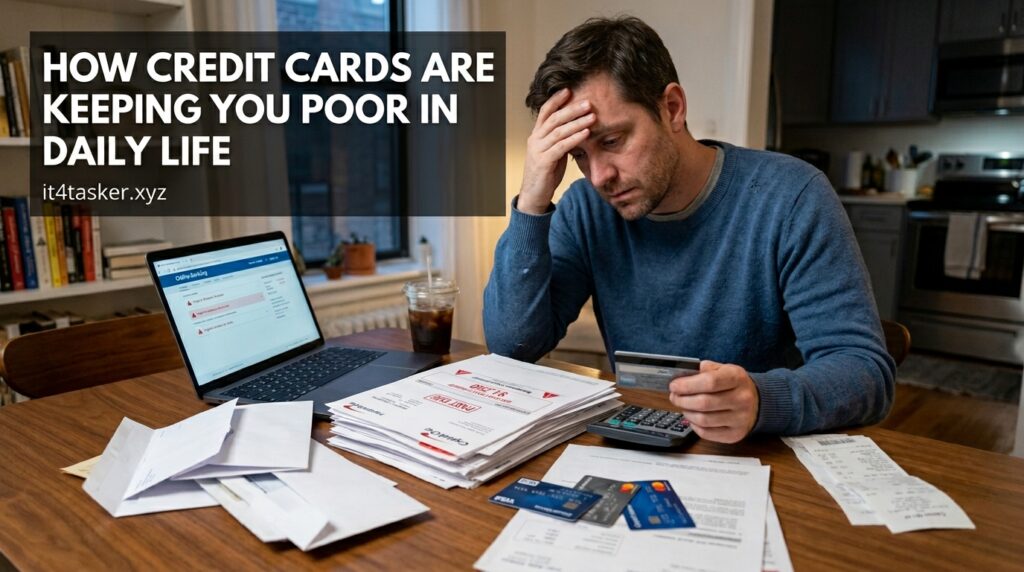
Then, create a debt payment plan.
Whether you use the avalanche method by ordering your debts by interest rate or
the snowball method where you order your debts by balance. Choose a plan that works for you,
be prepared, and pay off those debts.
And finally, always remember, you can talk to a financial professional.
Trying to get out of debt can feel overwhelming. Know that you can always reach out.
Reach out to a financial professional if you need help figuring out your next steps.
Credit cards aren’t going away, but a minimum payment isn’t the right way to live.
Freedom is not real freedom. It is being able to walk into a store and know.
You can buy something, but you don’t have to. It is your ability to sleep at night without thinking about it. About due dates and minimums and interest rates. It is living below your means, not to punish.
Yourself, but to protect your future. Because at the end of the day, wealth
is not just what you earn. It is what you keep. And the more of it that goes into interest,
the less of it goes into building a life that you truly own.