
Introduction:
- Regular tracking of your financial numbers is key to effectively managing your personal finances.
- Financial numbers provide insight into your financial health,
helping you make informed decisions. Tracking them can help you stay on top of your finances. - And address potential problems and reveal growth opportunities.
- Whether you’re a seasoned investor or just starting to take control of your finances,
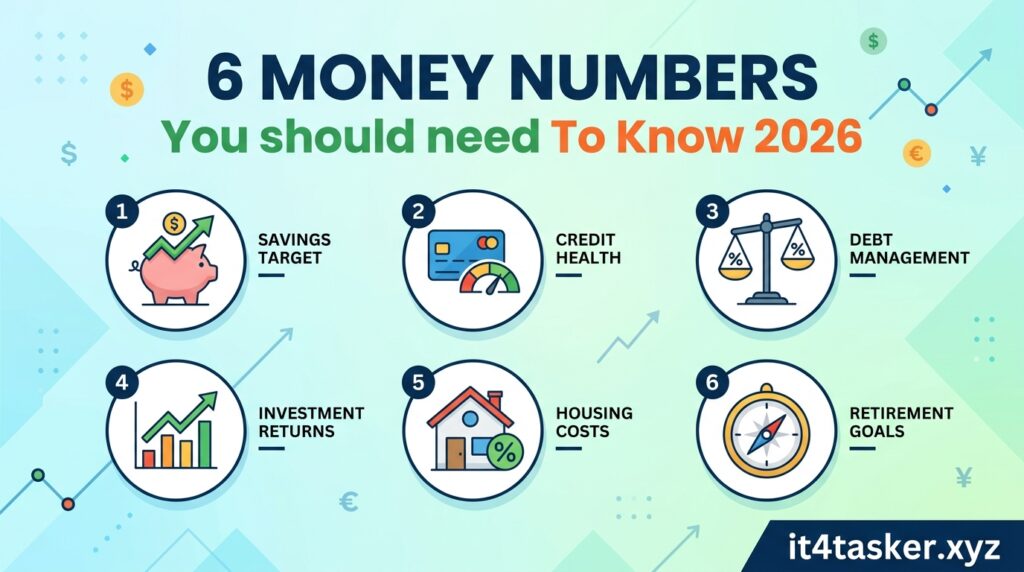
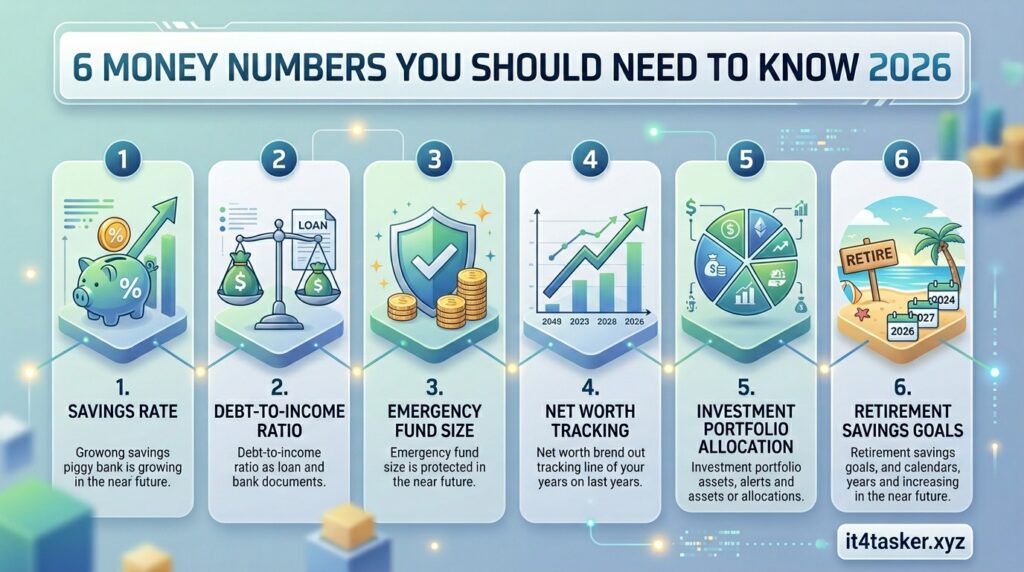
understanding and monitoring these key financial numbers is crucial. - Impact on your wealth-building journey. Here are 6 key financial numbers you should track.
- Net worth is an overall snapshot of your finances.
- Net worth is the difference between your assets (all the things you own) and your liabilities.
(what you owe). It’s often considered the most important financial number to track because it - provides a clear picture of your financial health. To calculate your net worth, start by making a list of all of your.
- Your assets, including bank account balances, investment accounts, real estate, and any other personal property of value, possibly things like art. Then, list all your liabilities, such as loans, credit card debt, and mortgages. Subtracting your total liabilities from your total assets will give you your net worth.
- A positive net worth indicates that you have more assets than liabilities, and is generally a sign of good financial health, but a negative net worth indicates that debts outweigh assets, which is an indication of potential financial trouble. So how do you improve your net worth? This will require increasing your assets, reducing your liabilities, or, more realistically, a combination of both. Paying off debts as quickly as possible and saving and investing aggressively will help you see your net worth increase over time.
- Speaking of which. To save and invest aggressively, let’s look at the next financial number to track.

Savings Rate:
- The percentage of your income that you save and invest. It’s a direct measure of your ability to save.
- Set aside money for long-term goals, emergencies, or retirement. A high savings rate accelerates your path to financial freedom, allowing you greater flexibility and peace of mind.
- A healthy savings rate not only helps you build a financial cushion, but also promotes discipline.
- In effectively managing money. Experts often recommend aiming for a savings rate of at least 20 percent,
but the right goal for you will depend on your financial goals, age, and lifestyle. - To calculate your savings rate, you want to divide the amount saved and
invested over a given period by your total net income for that same period,
then multiply by 100 to get the percentage. For example, if you save $500 and invest another $500. - Out of a monthly net income of $5,000, your savings rate for that month would be 20%.
So how do you increase your savings rate? - You can increase or decrease your income.
Your expenses. Strategies to increase your income could include changing jobs for higher pay,
freelancing, or starting a side hustle. - Ways to reduce expenses might include eliminating.
unnecessary purchases or aggressive debt payments from your budget. - One of the biggest ways to affect this number is to automate your savings.
- This ensures a
consistent portion of your money is allocated to savings or investments.
Cash flow:
- Understanding cash flow and
- managing your cash flow — how money moves in and out of your wallet and bank accounts — is essential for
- financial stability. It is generally classified into two types: positive cash flow, where your income is more than your expenses, and negative cash flow, where your expenses are more than your income.
- Typically, we calculate cash flow for a month. Add up all your sources of income,
- including salary, side hustle money, and other income streams,
- and then subtract your total monthly expenses. If the result is positive,
- you have extra money to use to save, invest, or reduce debt. A negative result
- indicates a need to reevaluate spending or increase income to avoid financial stress.
- Like your savings rate, the key to improving your cash flow is to increase it.
- Reduce your income and your expenses. One of the biggest enemies of positive cash flow
- is discretionary spending. Check your budget and make sure you’re not spending unnecessarily.
Emergency Fund:
- Emergency Fund Balance An emergency fund is a financial.
- safety net designed to cover unexpected expenses, such as a medical emergency, sudden job loss, or
urgent home repairs. - Having an adequate emergency fund is essential for financial flexibility, allowing you to handle life’s surprises without resorting to high-interest debt.
- Financial experts often recommend an emergency fund size of three to six months’ worth of living expenses, although the exact amount can vary based on job stability,
income sources, and personal circumstances. - The key point here is that your emergency
fund should grow with changes in your life. - If you buy a home, have children,
or are now caring for your parents, your emergency fund balance should grow. - To cover these additional potential financial stresses, prioritize contributing to this fund.
- Until you reach your goal, then maintain it as part of your overall financial plan.

DTI:
- Debt-to-Income Ratio (DTI) This financial metric is what lenders use.
Use it to gauge an individual’s ability to make monthly payments and repay loans. - It compares.
- Your total monthly debt payment is expressed as a percentage of your gross monthly income, and as a percentage.
A low DTI indicates a good balance between debt and income. Here’s how you calculate it. - Divide your total monthly debt payments (mortgage, car loans, student loans,
or credit card payments) by your gross monthly income; this is the income you make first.
Taxes are taken out. - For example, if your monthly debt payments total $2,000 and your gross monthly income is
- $6,000, your DTI is about 33%. Improving your DTI is about reducing.
- And eliminating your monthly debt obligations. Eliminate that budget.
- And improve your ways of prioritizing debt payments, especially those with high interest rates.
Credit Score:
- Your credit score is a numerical representation of your creditworthiness,
- based on your credit history and behavior. It affects your ability to borrow money,
the interest rate you’ll pay, and can even affect job opportunities and housing options. - It ranges from about 300 to about 850; the higher your credit score, the better your credit health.
- Nowadays, most of us can’t buy major items, like a house, outright with cash,
- so we’ll need to use credit. That’s why it’s important to check your score.
Regularly to make sure there are no errors or fraudulent activity. - Many credit card issuers
- and financial institutions provide their customers with access to free credit scores. Additionally,
annualcreditreport.com provides free annual credit reports from the three major credit bureaus, - Transunion, Experian, and Equifax, allowing you to review your credit history in detail.
To improve your credit score, pay off your credit cards in full every month. - But
if you’re taking out debt, prioritize paying those bills on time. Additionally, - avoid opening too many new credit accounts at once and correct any mistakes.
- It takes time and discipline to build a good credit score on your reports, but the benefits—
- lower interest rates, better loan terms, and increased financing options—are worth the effort.
- Regularly monitoring these six key financial numbers—net worth, savings rate, cash flow,
emergency fund balance, debt-to-income ratio, and credit score—gives you a comprehensive view of your financial health. - Paying close attention to these metrics and striving to improve can significantly increase your financial decision-making, stability, and resilience.
Financial well-being is an ongoing journey, characterized by informed planning, discipline,
savings, and proactive management. - Empower yourself to navigate this journey with knowledge, determination, and a focus on long-term success.