
Introduction:
- Investment rules are an essential element of investment management.
- Your money and growing your wealth.
- It sounds pretty straightforward, so what’s the problem?
- The truth is that investing is scary for many people.
- There are many different ways to invest, each with different risks associated with it.
- Getting started with investing is hard, so let’s make it a little easier and more accessible.
- The following concepts will help you start your journey by showing you where to be cautious.
But also help you build your confidence.
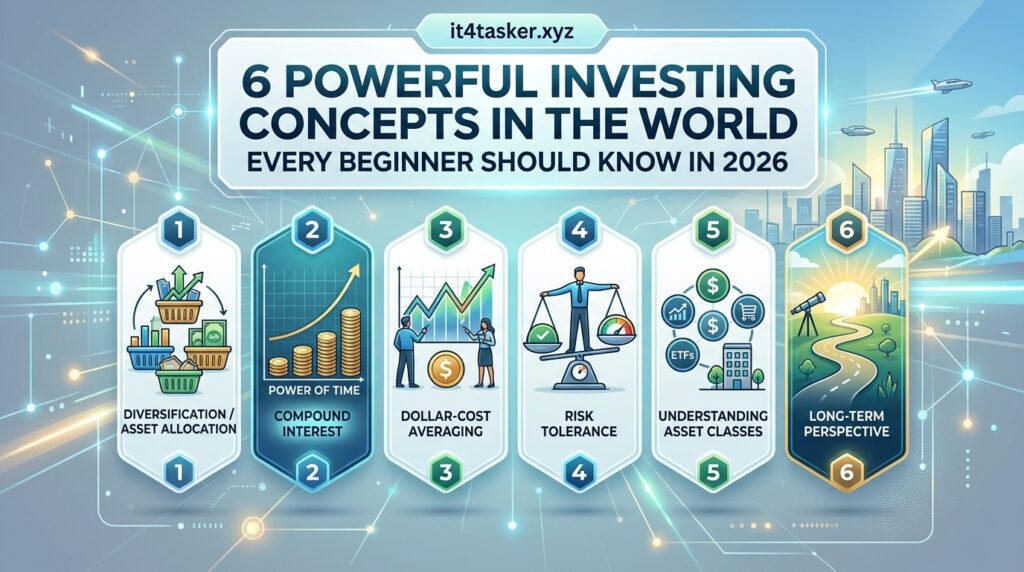
Here are 6 concepts to start your investing journey:
.
(1):
- You should define your financial goals and know why you’re saving.
- For example, is it buying a house, sending a child to college, or saving for retirement?
Knowing your financial goals and how long you plan to invest will help you set them.
Strategy - For example, let’s say you have long-term goals, such as saving for retirement, which could be
decades away. - In that case, you may be less motivated to withdraw from your investments before you retire
Your time horizon is the number of years you plan to wait before you need your investment money. - This is an essential part of creating an investment plan.
With a longer investment horizon, you can afford to take more risks with your portfolio,
and not be bothered by short-term market downturns. - Most investors can use general rules of thumb.
Still, everyone has a different risk tolerance, and their investments
should reflect that. - All of these things add up to objectives.
- Bigger reward, bigger risk
(2):
- The more significant the potential rewards, the greater the risk.
- Here’s a reality check on risk.
- Every investment carries some level of risk.
If the market goes down… - Stocks, bonds, mutual funds, and exchange-traded funds can all lose value.
Certificates of deposit from your local bank or credit union are a safe bet, but still - they aren’t completely immune to inflation.
And while they’re safer than stocks or funds, they’re most likely not going to earn as much.
Time to keep up with the rising cost of living. - Higher returns can be tempting, but the likelihood of losing your money is usually higher.
Consider your approach to taking risks carefully.
You may feel more comfortable choosing a less risky investment, even if the return is likely to be small. - However, keep in mind that no investment is without risk.
- There is always a chance that you will get less than you bargained for.
Know your risk tolerance and take calculated risks.
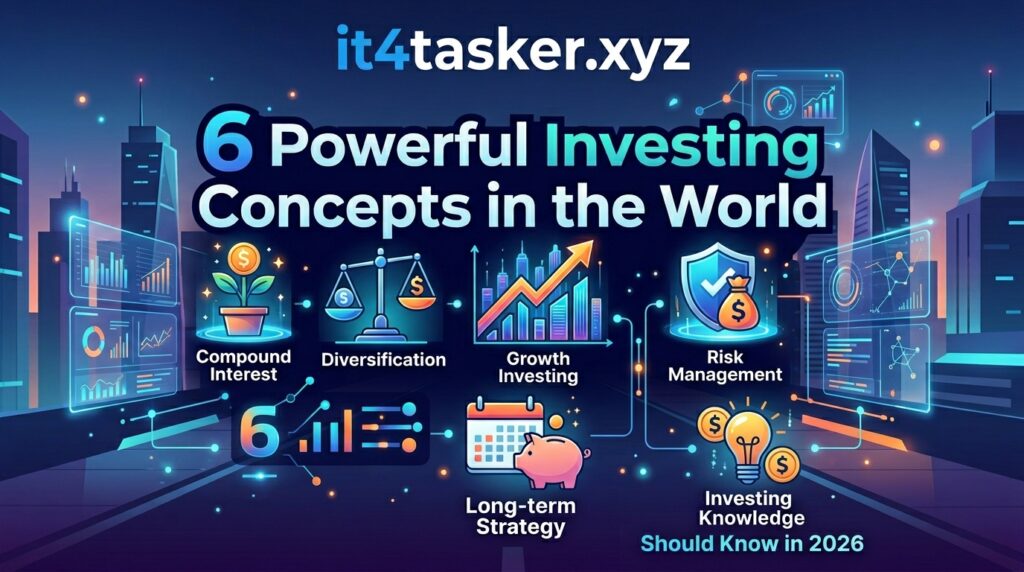
(3):
- Avoid putting all your eggs in one basket.
- We’ve all heard the saying, “Don’t put all your eggs in one basket.”
- When you’re investing, it’s important to follow this rule.
- Spreading your money across different assets and areas means you won’t be overly reliant.
- on one type of investment.
- If one of them doesn’t do well, the plan should be to have other investments make up for it.
- This
- is known as diversification.
- People can be afraid to invest because they don’t want to lose money.
- Investing your money in different investments can help reduce some of the risk.
- Simply put, diversification simply means putting your money in different assets, such as stocks,
- bonds, cash, and real estate, while trying to
- reduce risk as much as possible while trying
- to get the most out of it.
- Let’s say you decide to put some of your money in a cash savings account so that it’s easily
- accessible
- You also work your way up to owning multiple residential properties.
- Your retirement savings are split between stocks, bonds, and cash.
- This is an example of investing in diversified asset classes.
- This is important because different economic events don’t affect all of the assets.
- Similarly,
- if you don’t want to diversify yourself, you can invest in this fund.
- It does it for you.
- When one basket of investments underperforms the market, another may succeed.
- This provides some protection against losses to your money and investments.
(4):
- Is it too good to be true?
- If something sounds too good to be true, it probably is.
- Most of the time, a buyer’s decision is primarily influenced by their friends, neighbors, or family.
- So, if it seems like everyone else is buying a particular stock, it’s natural for new investors to follow suit.
One - However, in the long run, this technique can be doomed to failure.
- It should go without saying that you should never follow the crowd.
- Obviously, you don’t want to lose your hard-earned money in the stock market.
- Warren Buffett, the world’s greatest investor, was undoubtedly right when he
remarked, “Be fearful when others are greedy, and greedy when others are fearful!”
Beware of high-risk investments that seem too good to be true, and don’t invest just because
everyone else is doing it. - For example, many investors flocked to the digital currency Bitcoin in the latter part of 2017.
- It was the fresh, new technology that everyone wanted a piece of, and its price was skyrocketing.
- But since then, it’s been a wild, bumpy ride.
- In 2022 alone, Bitcoin lost more than 60% of its value.
- If you weren’t prepared for your investment to lose half of its value or you were looking for it.
- It would have been a loss for you to retire on some of that investment.
- Understand what you’re investing in.
(5):
- Never invest in something you don’t fully understand.
- Whatever investment you decide to make, you should first understand how it works.
- To get a stock, you need to know the financial direction of the company.
- When buying a mutual fund, you should know its financial background.
- You should even understand items like annuities before you invest in one.
- Before you put your money into any investment, you should take the time to learn as much as you can about it.
- So that you know what to expect and what the risks are.
Insurance investments, for example, provide a Key Information Document, a (KID), and this. - Explains the key features and fees of the investment.
- It is highly recommended that you read it before you invest.
If you are investing in individual businesses, make sure you understand what they do and how. - Their goal is to make money in the future.
Reinvest earnings.

(6):
- Reinvesting earnings can help increase overall returns.
- Assuming you don’t need the income from your investment.
In that case, you may want to consider reinvesting it to buy more of your investment, which can be. - Increase value and increase your overall returns.
- Simply put, compounding is when your returns earn more than you earn.
- Compound interest is straightforward.
- When you invest your money, you earn interest on it.
- The following year, you earn interest on both your initial capital and the interest earned.
The previous year. - In the third year, you earn interest on your capital as well as interest from the previous one.
Two years, and so on. - Einstein even said that compound interest is the “eighth wonder of the world” to demonstrate its power.
- So if you don’t need the money right now, let it keep working and growing for you.
Reinvestment. - If you’re new to investing, you’ll benefit from starting with these investment concepts.
Initial traction. - Remember that investing only seems scary when you’re not knowledgeable, so keep
Reading, listening, and learning about the process. - Understand that there will always be a degree of risk, but once you understand your risk tolerance, you will be able to use these simple investment strategies to put your money to work and plan for your future. If you learned something new today, like this video and share it with your friends.