Introduction:
- Do you often have little or no money at the end of the month?
- Do you ever feel like your finances are in a constant state of crisis?
- If so, you’re probably not alone.
- An estimated one-third of Americans regularly struggle to meet their financial commitments.
- The Basis
- However, this doesn’t have to be the case for you.
- Maintaining a financially responsible lifestyle isn’t as difficult as it seems.
- With focus and determination, anyone can implement proper budgeting habits that will yield.
- A multitude of benefits over time.
- Like financial plans, no one budget fits all.
- In this video, we’ll take a look at three different types of budgets and offer some recommendations.
- Tips for creating and tracking your own.
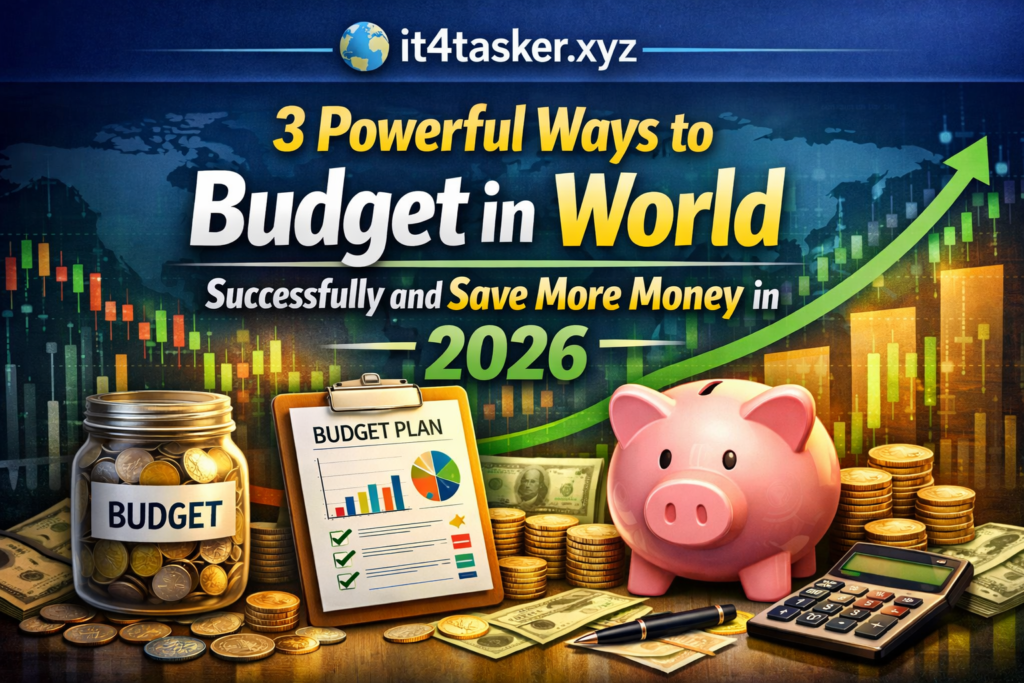
Zero-Based Budget:
(1) Zero-Based Budget Zero-based budgeting is the most widely used:
Budgeting method:
- It’s a simple concept that works great for most people.
- The basic idea behind this type of budget is to take what you make and then subtract.
- Your essential expenses.
- Once you do this, you should have some extra money left over.
- If you don’t, you’ll need to find a way to increase your income.
- Here are some examples of how it works.
- Let’s say you make $5,000 per month.
- Your rent is $1,000.
- You have $4,000 left over.
- Your car payment is $300 per month.
- You have $2,700 left over.
- You spend $200 per month on groceries.
- You have $2,500 left over.
- You have $120 per month for gas.
- You have $2,380 left over.
- This is what your budget would look like after you do the math.
- After you’ve cut all your expenses, the money you have left over goes into your savings account.
- As you can see, this budget is pretty straightforward.
- It shows you where your money is going each month, making it easy to trim the fat.
- And prioritize your savings and investments.
- 50/30/20 Budget.

(2) 50/30/20 Budget The 50/30/20 budget is another popular budget:
Methods
- It’s very similar to a zero-based budget, with a few minor differences.
- The 50/30/20 budget tries to make your budget more balanced by dividing your income into three categories.
- Each category should account for 50%, 30%, and 20% of your total income, respectively, although
- you can (and should) adjust this as needed.
- The first section is for fixed expenses like utilities, rent, groceries, gas, and others.
- Regular bills.
- This category is for your necessities and will take up 50% of your total income.
- The second section is for your wants like entertainment, eating out, shopping, etc.
- You can spend 30% of your income on these.
- The third section is for savings.
- No matter how you organize it, you should put 20% of your total income into your savings.
- Account
- Once you have paid for your necessities and wants section, if you still have money left over, you
- can add it to your savings account.
- This way, you are ensuring that you have enough money to live on without running out.
- This method is a bit like the zero-based budgeting method.
- The main difference between the two is that the 50/30/20 budget is designed to be more.
- Balanced
- This ensures that each category has a set amount of your income, which can be useful.
- For those who have trouble making their budget work.
- It can also be helpful for those whose income varies from month to month.
- It works on percentages.
- A quick reminder, before we move on to our discussion on this topic..
- If you enjoyed the video so far, consider subscribing, as we upload more like this often.
- Informative and educational videos!
- Let’s keep going.
(3) Sub-Savings Account Method The sub-savings account method is an effective:
- budgeting method, especially if you are really serious about saving money.
- Sub-Savings Account.
- This is a little more complicated than the other two methods mentioned in this video, but it is
- very effective.
- The reason the sub-savings account method is popular is because it allows you to save money
- without taking up much space in your budget.
- It is also easy to implement because it does not require much effort.
- Sub-savings works best when you have a clear goal in mind.
- If you want to save for a vacation later this year, you should start saving now.
- You can reach your goal in time.
- The basic idea behind this budgeting method is that you put a certain amount
- into sub-savings accounts each month.
- These sub-savings accounts are intended to meet different financial goals, such as paying off
- debt, buying a house, or saving for retirement.
- This method is especially useful for those who want to become financially independent.
- But saving money is difficult.
- It allows you to set specific and measurable goals in a way that makes them seem more achievable.
- Here are some examples of how the sub-savings account method works.
- Let’s say you want to save $500 for a vacation and $500 to pay off credit card debt.
- You have $200 left to save each month, so you can set aside $100 each month.
- In your sub-savings accounts: one for your vacation and one for your debt.
- That way, you’ll have your money in less than six months with little effort.
- Or compromise.
- As you can see, this type of budgeting method allows you to be very specific in how you
- save money.
- It allows you to prioritize your savings goals and gives you a solid way to track your goals.
- Progress
- This can also be a complimentary budget to the first two.
- Budgeting tools and apps can complement budgeting tools and apps.
- Budgeting tools and apps
- Make the process of creating and tracking a budget very easy.
- They allow you to create a budget that you can track in real time, which makes it.
- It’s very easy to stay on track.
- There are a ton of different budgeting apps available, including Mint, You Need a Budget,
- and Wally.
- All of these apps are designed to make the budgeting process easier.
- They track your expenses and give you helpful insights into where you’re spending your money.
- They also make it easy to manage your budget on the go, which is especially helpful if
- you work in a field where you have to travel frequently.
- These budgeting apps also make it easy to collaborate with your significant other.
- They allow couples to share budgets with each other and hold each other accountable.
- It’s a great way to make sure both partners are saving enough and prioritizing the right things.
- The right things
- As you can see, there are a few different ways to budget, and these aren’t the only ones.
- Three
- The zero-based budget is the most commonly used method and is a great place to start if you’ve never budgeted before.
- The 50/30/20 budget is another popular option that makes your budget more balanced, and
- The sub-savings account method is best for those who are really serious about saving.
- Money for different things.
- Regardless of which method you choose, it’s important to create a budget if you want
- To track and understand your spending habits.
- They help you see where your money is going so you can stop wasting cash on things that don’t matter and start investing in yourself instead.
- Do you use a budget?
- Maybe there’s one that’s not listed in this video, tell us about it in the comments below!
- If you liked these easy and simple budgeting tips, give this video a big thumbs up.
- And leave us a comment below.
- We’d really appreciate it.